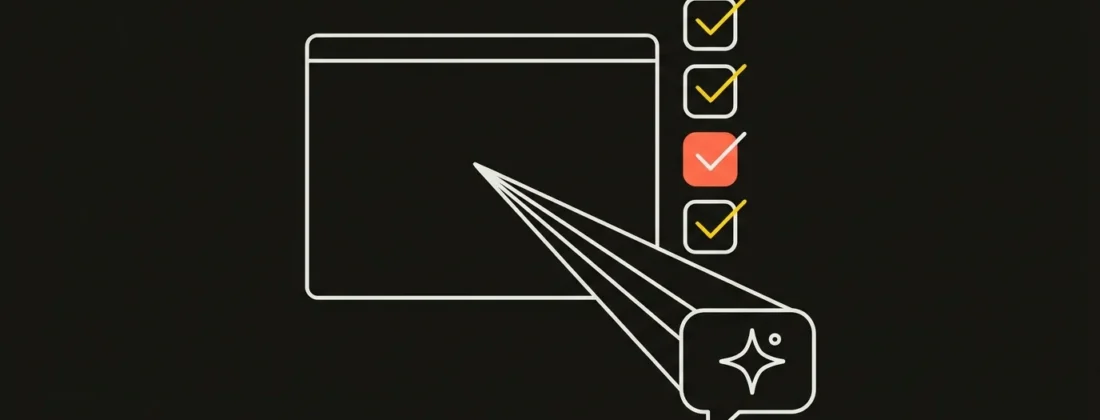
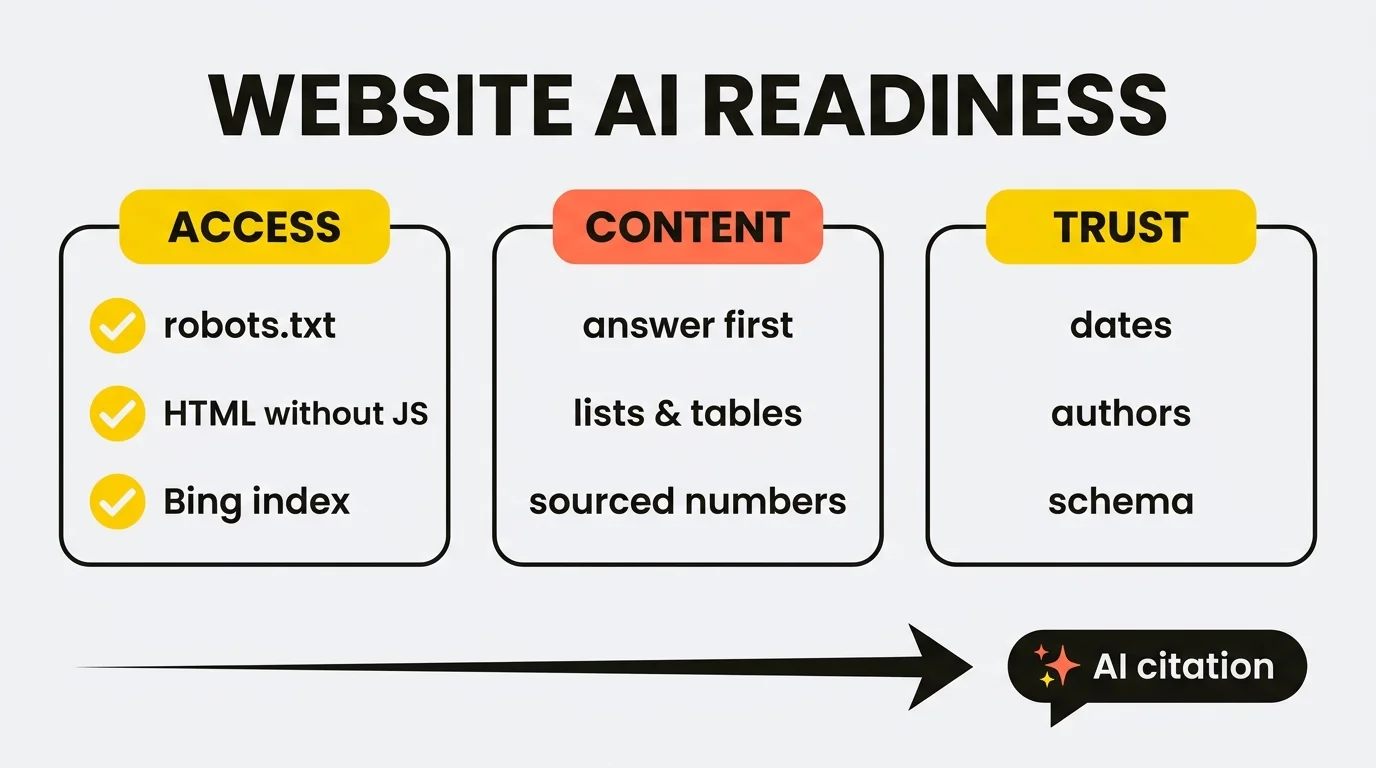
A generative engine — a system that answers with a generated response instead of a list of links (ChatGPT, Perplexity, Google AI Overviews, Copilot) — reads your website differently than a human visitor or a classic search crawler. AI search readiness therefore needs its own checklist: 12 checks in three layers — crawler access, extractable structure, and trust signals — each with a test you can run today and a concrete fix.
The checklist is the condensed layer of GEO (generative engine optimization) — creating and optimizing content so that it gets cited and used in AI-generated answers. For the full method, see our guide to GEO (generative engine optimization).
Why does ranking in Google not equal AI search readiness?
Because generative engines mostly cite pages from outside Google’s top 10. Across 15,000 long-tail queries, only 12% of the links cited by ChatGPT, Gemini, and Copilot ranked in Google’s top 10, and roughly 80% of cited pages did not rank anywhere in Google for the original query (Ahrefs, 2025). Inside Google itself, in March 2026 only 37.9% of citations in AI Overviews — the AI-generated summaries above Google’s search results — came from the top 10, and 31% from beyond the top 100 (Ahrefs, 2026; partly a methodology change).
Google rankings and AI visibility are related but separate goals — we unpack the differences in GEO vs SEO — what actually changes.
A website ready for generative engines is one an AI crawler can fetch without executing JavaScript, understand without reading the whole page, and cite without risk — because every key claim has a named subject, a number, a source, and a date.
Don’t want to run 12 manual checks yourself? These are exactly the areas an AI visibility audit covers — plus measurement of how generative engines already cite your domain.
Checks 1–4: Can AI crawlers access your content at all?
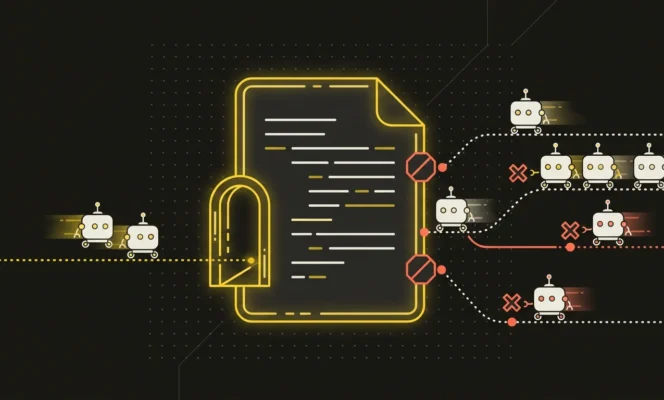
Technical access is the zeroth condition: content an AI crawler cannot fetch will never appear in an answer.
1. Content is visible without JavaScript
What to check: disable JavaScript in your browser (or fetch the page with curl) and confirm the core content — text, headings, prices, data — is present in the raw HTML. None of the major AI crawlers render JavaScript: GPTBot (569 million requests per month) and ClaudeBot (370 million) download JS files but never execute them; the exceptions are Gemini, which runs on Googlebot’s infrastructure, and AppleBot (Vercel + MERJ, 2024). Content rendered exclusively client-side is invisible to these bots.
How to fix it: server-side rendering (SSR) or static generation for critical content; key information ships in the HTML, never loaded in afterwards by a script.
2. robots.txt reflects a deliberate per-bot policy
What to check: open your /robots.txt and compare its rules against the current bot names — training and search crawlers are controlled separately. OpenAI runs three bots with independent controls: GPTBot (model training), OAI-SearchBot (the ChatGPT search index), and ChatGPT-User (user-triggered fetches); blocking OAI-SearchBot means your pages “will not be shown in ChatGPT search answers”, while blocking GPTBot only opts you out of training (OpenAI, 2025). Anthropic runs an analogous trio (ClaudeBot, Claude-SearchBot, Claude-User), all honoring robots.txt (Anthropic documentation, accessed 2026); Perplexity’s user-triggered fetcher, Perplexity-User, “generally ignores robots.txt rules” (Perplexity documentation, accessed 2026). Google-Extended is only a control token: blocking it opts you out of Gemini training and grounding but does not affect Google Search or AI Overviews (Google documentation, accessed 2026).
How to fix it: write an explicit policy per bot — for example, block training crawlers while allowing search crawlers — as separate User-agent sections. Do not copy someone else’s robots.txt: a site trying to optimize for ChatGPT can easily block OAI-SearchBot by accident.
3. The site is indexed in Bing
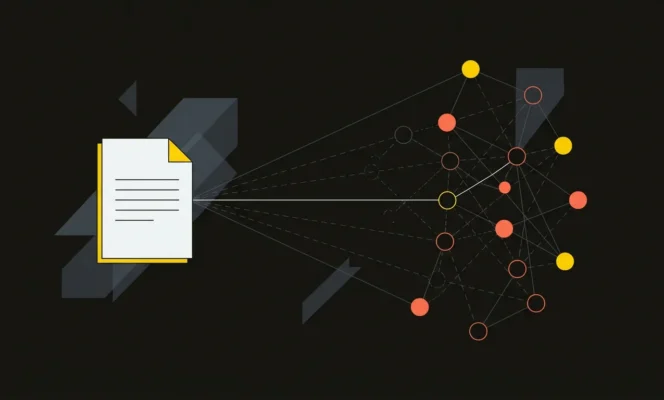
What to check: run site:yourdomain.com in Bing and verify the domain in Bing Webmaster Tools. Microsoft Copilot is grounded by Bing Search, so only pages in Bing’s index can appear in its answers; Bing also remains a relevant grounding channel for ChatGPT search, alongside OpenAI’s own OAI-SearchBot index (Microsoft Learn, accessed 2026).
How to fix it: add the domain to Bing Webmaster Tools, submit your sitemap, remove any bingbot blocks, and monitor index coverage.
4. Titles and URLs describe the content directly
What to check: does each page title read like the answer to a real user question, and is the slug a readable phrase rather than a parameter string? Pages cited by ChatGPT have titles semantically closer to the prompt — cosine similarity of 0.602 versus 0.484 for non-cited pages — and search results with readable, natural-language slugs had a higher citation rate: 89.78% versus 81.11% for those without (Ahrefs, 2026).
How to fix it: title = the page’s main question or claim; slug = the key phrase; one URL = one topic.
Checks 5–8: Can your content be quoted out of context?
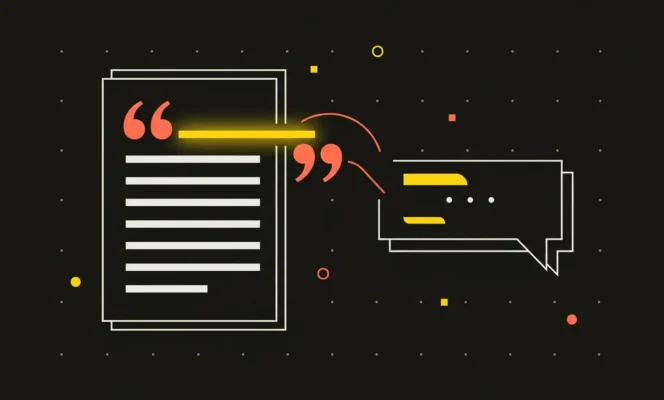
Generative engines cite fragments, not pages — so citability depends on whether a fragment works out of context.
5. The answer sits at the top of the page and of every section (BLUF)
What to check: does the first paragraph after the title — and after every H2 — carry the answer, or a warm-up? In an analysis of 1.2 million ChatGPT answers, 44.2% of verified citations pointed to the first 30% of a page’s text, and only 24.7% to the final third (Kevin Indig, 2026).
How to fix it: add a self-contained “answer in brief” box at the top of the article, and rewrite the first sentence of every section so it states the conclusion.
6. Headings are questions and the hierarchy has no gaps
What to check: one H1, then H2 to H3 with no skipped levels — and H2s phrased as the questions users actually type into chatbots. The same ChatGPT citation study found that cited pages contain questions and question-and-answer structure twice as often as non-cited pages (Kevin Indig, 2026).
How to fix it: rewrite H2s as real prompts, put the answer in the first sentence beneath each one, and delete decorative headings that carry no information.
7. Lists, tables, and steps instead of a wall of text
What to check: are enumerable facts in lists, comparisons in tables, and instructions in numbered steps? Listicles are the most-cited content format in generative engines — 21.9% of more than a million citations across ChatGPT, AI Mode, and Perplexity, rising to 40.86% for commercial queries — and matching format to query intent predicts citability better than industry does (Wix Studio AI Search Lab, 2026).
How to fix it: convert comparisons into tables, processes into numbered lists, and feature run-downs into bullet lists.
8. Every number has a source — and no keyword stuffing
What to check: does every statistic on the page carry a source and a year, and is the copy free of artificially repeated key phrases? In a peer-reviewed GEO experiment on a 10,000-query benchmark, adding statistics, quotations, and source citations lifted content visibility in generative answers by up to 40% on the benchmark metric, while keyword stuffing reduced it by about 9% (Aggarwal et al., KDD 2024). An independent replication did not confirm the uplift — only 3 of 54 cases showed a statistically significant positive effect (Puerto et al., NeurIPS 2025). Sourced numbers are credibility hygiene, not a guaranteed visibility multiplier.
How to fix it: remove every “studies show” that has no reference; link each number to a primary source with a year; drop keyword stuffing entirely — in both studies it never helped.
Checks 9–12: Does the model have reasons to trust you?
Trust signals — dates, named authors, consistent structured data — decide whether your page is a safe source for a model to cite.
9. A visible, truthful publication and update date
What to check: is the publication date and last-updated date in the visible text of the page, not just in metadata? AI assistants (ChatGPT, Perplexity, Gemini, Copilot) cite content that is on average 25.7% fresher than Google’s organic results — 1,064 days old versus 1,432; the exception is AI Overviews, where citation age mirrors the age of the search results (Ahrefs, 2025).
How to fix it: show real dates and update the substance, not the timestamp — the freshness effect for updated dates alone is much weaker, at 13.1% (Ahrefs, 2025).
10. A named author with a role and a bio
What to check: is each article signed by a specific person with a visible role and bio, or by an anonymous “editorial team”? Google states that its generative features run on the same core ranking and quality systems as classic Search, and that visibility comes from helpful, people-first content with visible expertise — E-E-A-T: experience, expertise, authoritativeness, trustworthiness (Google Search Central, 2025).
How to fix it: build author pages with a bio, a specialization, and a professional profile link; sign every article with the person qualified for its topic.
11. Structured data matches the visible text — with no miracle expected
What to check: does your structured data (schema.org) validate, and does it say exactly what the visible page says? In a quasi-experiment on 1,885 pages that added JSON-LD, no engine showed a significant increase in AI citations, and AI Overviews even recorded a small 4.6% decline (Ahrefs, 2026). Google confirms no special markup, AI file, or schema is required to appear in AI Overviews or AI Mode (Google, 2025); FAQ and HowTo rich results were withdrawn for ordinary sites back in 2023 (Google, 2023).
How to fix it: keep BlogPosting schema with author and dates as machine hygiene — and put the extractive value in visible text. Questions and answers should be page content, not just markup.
12. llms.txt is treated as a cheap extra, not a requirement
What to check: whether anyone has sold you llms.txt — a proposed standard for a site content map addressed to AI systems — as an “AI visibility implementation”. No major LLM provider (OpenAI, Anthropic, Google) has formally adopted llms.txt; 28% of 137,000 studied domains publish one, yet 97% of those files received zero requests in May 2026 (Ahrefs, 2026).
How to fix it: add llms.txt if you like — the cost is near zero — but treat it as a bet on the future. Checks 1–11 come first.
AI search readiness at a glance: the 12 checks in one table
The table condenses the 12 checks into quick tests, no paid tools required.
| Check | Quick test | Fix in short |
|---|---|---|
| 1. Content without JavaScript | Disable JS — is the content still there? | SSR or static generation |
| 2. Per-bot robots.txt | Which AI bots do you block, and why? | Separate rules: training vs search |
| 3. Bing indexing | Does site: in Bing return your pages? |
Bing Webmaster Tools + sitemap |
| 4. Titles and slugs | Does the title read like an answer? | Title = claim, slug = key phrase |
| 5. BLUF | Is the answer in the first paragraph? | TL;DR up top, claim in sentence one |
| 6. Question headings | Do H2s read like real prompts? | H2→H3 hierarchy, question + answer |
| 7. Lists and tables | Comparisons in tables, steps in lists? | Format matched to query intent |
| 8. Sourced numbers | Does every statistic have a source and year? | Links to primary sources, zero stuffing |
| 9. Visible dates | Publication/update date in the text? | Real dates + substantive updates |
| 10. Named authors | A person or an anonymous “team”? | Bio, role, professional profile |
| 11. Structured data | Does schema match the visible text? | BlogPosting with author and dates; content > markup |
| 12. llms.txt | Treated as an extra, not a requirement? | Add it if you like; checks 1–11 first |
FAQ: common questions about AI search readiness
Does blocking GPTBot remove my site from ChatGPT?
No — GPTBot only controls whether your content is used for model training; visibility in ChatGPT search is governed by a separate bot, OAI-SearchBot (OpenAI, 2025). Note that ChatGPT-User, which fetches pages on a user’s request, may not respect robots.txt — OpenAI states: “Because these actions are initiated by a user, robots.txt rules may not apply.” An effective block requires firewall rules using OpenAI’s published IP ranges (OpenAI, 2025).
If AI cites my page, will users actually see my brand?
Not always. 61.7% of citations in AI answers are ghost citations — the page URL is listed as a source, but the brand is never named in the answer text (Semrush, 2026). Being cited and being mentioned by name are two different goals that call for different content.